Bedding Guide
Choosing a Naturepedic Alpaca Duvet Insert for Your Sleep Climate
A comfortable duvet is less about finding the warmest option and more about finding the right amount of warmth for your body, bedroom, and habits. Naturepedic’s alpaca insert comes in two stated fill weights, giving sleepers a useful starting point for choosing between a lighter layer and more substantial, all-season insulation.
Some sleepers slide under the covers and feel cozy within minutes. Others wake up warm, push the duvet aside, and pull it back again before morning. That difference is why choosing a comforter by material name alone rarely tells the whole story. Your sleep climate—the combined effect of your body’s warmth, room temperature, bedding layers, and airflow—matters just as much as the fiber inside the insert.
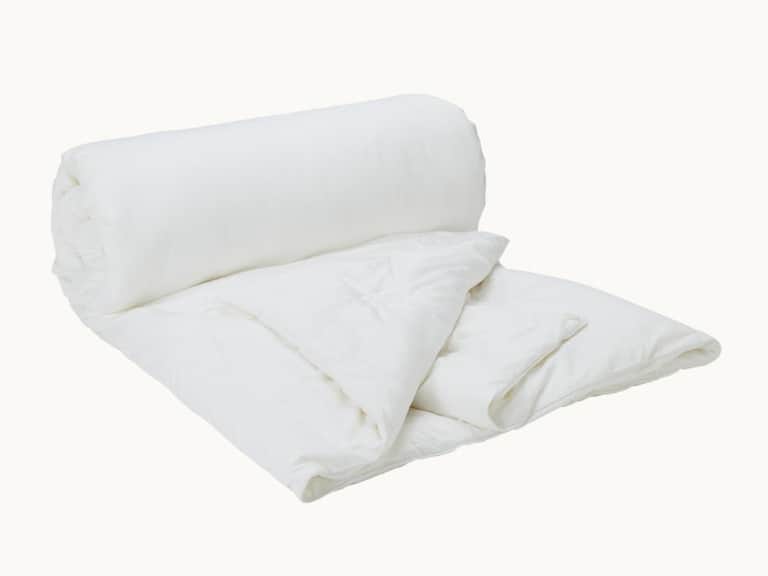
The Naturepedic Alpaca Duvet Insert Comforter uses alpaca fiber in two listed fill weights: 400 GSM for the lightweight option and 500 GSM for the all-season or warm option. GSM, or grams per square meter, describes the mass of fill distributed across an area. It is a practical point of comparison, not a universal warmth score. Still, the difference can help you think through how much insulation you want before settling on a size and weight.
Below, we look at the details that matter: how to interpret fill weight, how alpaca’s moisture-management qualities may suit different sleepers, what your bedroom conditions can reveal, and how to protect an insert whose care instructions favor spot cleaning and professional laundering.
Start with the room, not the label
“Lightweight” and “all-season” sound straightforward, but they can mean different things in different homes. A lightweight insert in a drafty room may feel just right to one person and too cool to another. The same insert may be more than enough in a well-insulated apartment where the thermostat stays steady overnight.
Before comparing the 400 GSM and 500 GSM options, consider the conditions in which you actually sleep. Think beyond the temperature setting on your thermostat. Bedrooms can differ from the rest of the home, and warmth can shift through the night as heating systems cycle or weather changes.
- How warm do you tend to sleep? If you regularly wake feeling overheated, you may prefer less insulation or a lighter combination of layers.
- What is your bedroom like overnight? A consistently cool room may call for more substantial coverage than a warm, stable space.
- Do you sleep alone or share a bed? Two people can have very different warmth preferences under the same duvet.
- What else is on the bed? Flannel sheets, a thick duvet cover, blankets, mattress protectors, and sleepwear all contribute to how warm the bed feels.
- Does the temperature vary by season? A bedroom that cools sharply in winter may require a different setup from one that remains temperate all year.
It can help to keep a short note for a week or two: whether you feel comfortable at bedtime, wake warm or cool, and what layers you use. The goal is not to measure every nighttime fluctuation. It is to notice a pattern. If you often discard blankets or wake damp and uncomfortable, a heavier insert may not be the most useful solution—even if the room is cold.
What 400 GSM and 500 GSM tell you
The Naturepedic insert’s listed weights offer a clear starting comparison. The 400 GSM lightweight option contains less fill per square meter than the 500 GSM all-season or warm option. In broad terms, less fill often means a less substantial insulating layer, while more fill can provide a fuller, warmer feel. But that does not make GSM a precise predictor of how warm every sleeper will feel.
Construction, the type and condition of the fibers, the shell fabric, the duvet cover, and the room itself all influence the experience. Two comforters with the same GSM can behave differently if their materials and construction differ. And the warmth of a duvet is not created by the insert alone: it comes from the complete bedding arrangement and how that arrangement interacts with your body.
| Listed option | Fill weight | A reasonable starting point | What to keep in mind |
|---|---|---|---|
| Lightweight | 400 GSM alpaca wool | Warmer bedrooms, people who sleep hot, or sleepers who prefer a lighter covering | Room temperature and other bedding layers still affect perceived warmth. |
| All-season / warm | 500 GSM alpaca wool | Cooler rooms, people who sleep cold, or sleepers who want a more substantial layer | “All-season” is not a promise of equal comfort in every climate or bedroom. |
This comparison is a guide to the stated fill weights, not a guarantee that one option will feel a particular way to every person. If you are between the two, consider what you can change more easily. A removable duvet cover and an extra blanket can make a lighter setup more adaptable, while a heavier insert may be less convenient if you routinely get too warm.
Why alpaca may appeal to temperature-conscious sleepers
Alpaca is a natural animal fiber used in bedding for its insulating qualities and soft, lightweight structure. The product description for this insert highlights temperature adaptation and moisture-wicking performance: qualities that can matter to sleepers who want warmth without a feeling of stuffiness. Fiber performance, however, should be understood as one part of the sleep setup—not a promise that a comforter will regulate every person’s temperature in the same way.
Moisture management is worth considering if you tend to feel clammy beneath bedding. During sleep, the body releases heat and moisture. Bedding that allows a comfortable exchange with the surrounding air may help the bed feel more balanced. The duvet cover and sheets play a role, too. A dense or especially warm cover can change the feel of the insert, while a more breathable combination may support a lighter impression.
Alpaca may also be of interest to people seeking a down-free filling. “Down-free” means that the fill does not use down—the soft undercoating of birds. It does not necessarily mean vegan or animal-free: alpaca fiber comes from an animal. If avoiding animal-derived materials is a priority, check the complete material description and sourcing information rather than relying on the phrase “down alternative.” If you are choosing bedding because of an allergy or sensitivity, review the materials carefully and consult a qualified health professional for advice specific to your needs.
The Naturepedic insert is described with an organic cotton casing and ethically sourced alpaca fiber. The product information also notes that the cotton is OCS-certified. Certifications can help explain what a particular claim covers, but they are not interchangeable; if a specific standard matters to you, confirm its scope and applicability with the manufacturer or certifying organization.
Match the option to your sleep habits
Once you have considered the room and fill weight, picture an ordinary night rather than an idealized one. Do you keep the window open? Do you add a blanket in winter? Does your partner prefer a warmer bed? The more honestly you account for those habits, the less likely you are to choose by a label that sounds appealing but does not fit your routine.
The lightweight option may make sense if you tend to sleep warm
If you often feel hot under conventional comforters, prefer fewer layers, or live in a mild climate, the 400 GSM option may be a sensible place to start. It is also worth considering if your bedroom stays warm overnight or if you want a lighter covering for much of the year. You can add a separate blanket on colder nights rather than committing to a heavier layer every evening.
The all-season or warm option may suit a cooler sleep climate
If you regularly feel cold at bedtime, your room loses heat overnight, or you enjoy a fuller duvet, the 500 GSM option may be more aligned with your preferences. It may also suit someone who wants a more substantial covering and expects to use the insert across a range of seasons. “All-season” should still be weighed against your climate and personal comfort: in a warm room or for a hot sleeper, more fill can feel like too much.
Shared beds may need a compromise
When one person sleeps warm and the other sleeps cold, a single comforter can become a negotiation. Consider whether the person who feels colder can use a separate blanket on their side, or whether room temperature and sheet choice can be adjusted. Before deciding on a fill weight, talk through the actual problem: one sleeper may need more coverage, while the other may need a cooler layer or greater airflow.
Choose the size and duvet cover carefully
Warmth is only one part of a comfortable fit. Check the insert dimensions against your duvet cover and mattress size, and allow for the way you like the bed to drape. A cover that is substantially larger or smaller than the insert can affect how the fill sits and how the finished bed feels. If the insert will go inside a cover, check for compatible corner ties or loops on both pieces; do not assume every duvet cover uses the same attachment system.
A duvet cover is also useful protection. It takes much of the everyday contact from skin, sleepwear, and the room, and it is generally more convenient to clean than the insert. Choose a cover whose fabric feels comfortable against your skin and suits your sleep temperature. A cozy brushed fabric can add a warmer sensation; a lighter, breathable cover may better match a warm bedroom or a sleeper who prefers a less enclosed feel.
Care guidance deserves attention before you buy, especially if you want bedding that can be tossed into a home washing machine. According to the product information, the Naturepedic alpaca insert is spot-clean only, with professional laundering recommended if a more thorough cleaning is needed. That is a different routine from an easily machine-washable comforter, so consider whether it matches your household and how you plan to protect the insert.
Care that protects the fill
Natural fills can require more care than many synthetic alternatives. For everyday protection, use a duvet cover, air the insert periodically, and address small marks promptly using the care instructions supplied with the product. Avoid soaking the fill or applying harsh cleaners unless the manufacturer specifically permits it. Excess moisture that does not dry completely can create problems for bedding and may affect the materials.
The product information recommends spot cleaning and, when necessary, professional laundering rather than routine washing. It also describes home laundering only as an option if laundering is unavoidable, with specific cautions: use a mild detergent, a delicate cycle, and a machine without a center agitator; avoid bleach and fabric softener; rinse thoroughly; and ensure the wool is completely dry. High heat can cause wool to shrink, so the listed guidance advises against it. Because results can be unpredictable with a thick comforter, follow the current care label and manufacturer instructions first, and consider a professional service if you are unsure.
These details are not a reason to avoid alpaca bedding, but they are worth factoring into the decision. Someone who values a natural fill and is comfortable using a protective cover may find the routine manageable. A household that needs frequent machine washing may prefer to compare care requirements across materials before choosing.
A practical checklist before choosing
Use this short checklist to turn the broad question—“Which duvet is right for me?”—into a more specific one:
- Record whether you usually sleep hot, cold, or comfortably between the two.
- Think about overnight bedroom conditions, including drafts, heating, and seasonal changes.
- Choose whether the listed 400 GSM lightweight or 500 GSM all-season/warm weight better matches your routine.
- Account for sheets, sleepwear, blankets, and the duvet cover you plan to use.
- Confirm insert and cover dimensions, plus any attachment details needed to keep them aligned.
- Read the complete material and sourcing information if down-free, animal-derived, or certified materials matter to you.
- Make sure spot cleaning or professional laundering fits your care preferences.
If possible, also review the return policy and warranty before purchasing. Comfort is personal, and a listed warmth category cannot account for every bedroom or sleeper. Clear policies can help you understand your options if the feel is not what you expected.
The bottom line
Choosing a Naturepedic alpaca duvet insert is a matter of matching its fill weight and care routine to the way you sleep. The 400 GSM lightweight version offers the lower-fill option; the 500 GSM all-season or warm version provides a more substantial alternative. Neither number, on its own, guarantees a particular temperature experience. Your bedroom climate, personal warmth preferences, cover fabric, and other bedding layers all count.
Alpaca’s appeal lies in its natural insulating and moisture-management qualities, paired here with an organic cotton casing. For sleepers looking beyond conventional down, it can be a relevant down-free choice—while still being an animal-derived fiber, an important distinction for people shopping by ethics or material preference. And because the care guidance favors spot cleaning and professional laundering, a duvet cover is more than a styling detail: it is a practical way to help protect the insert and reduce how often it needs attention.
Start with your sleep climate, compare the stated GSM options, and be realistic about maintenance. That simple sequence can turn a confusing bedding decision into a considered choice—one better suited to the room you sleep in and the comfort you want night after night.